
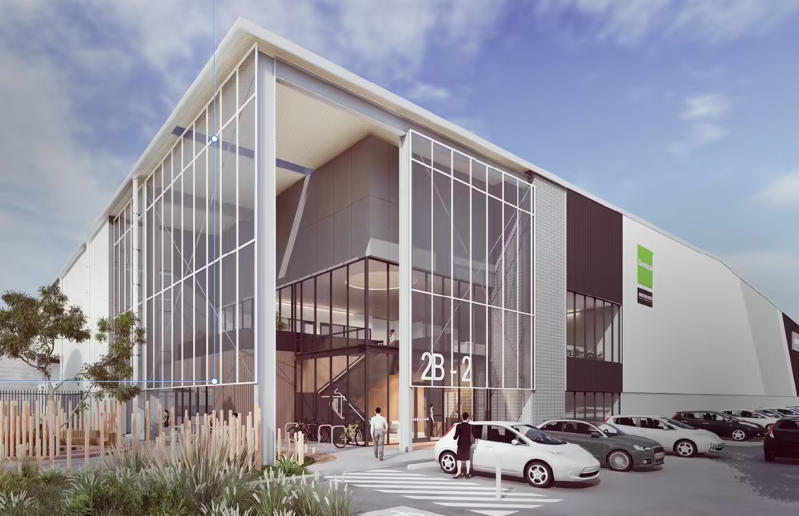
Western Sydney’s industrial property market has always had strong fundamentals: land availability, proximity to major population growth corridors and access to Sydney’s broader freight network. What’s changed is the scale of connectivity now being built around it. Roads, rail planning, airport-linked infrastructure and expanding logistics precincts aren’t just improving movement through the region; they’re reshaping what industrial users expect from a site.
For occupiers, investors and developers, the conversation has moved beyond square metres and rental rates. The stronger question is: how well does this location connect to customers, suppliers, workers and future freight pathways? That’s why airport infrastructure driving warehouse and logistics demand has become such a defining theme across the region’s industrial landscape.
Connectivity Has Become a Commercial Advantage
In industrial property, time is cost. A warehouse that saves vehicles 20 minutes per trip can create measurable operational value across labour, fuel, delivery windows and fleet utilisation. Multiply that across hundreds or thousands of movements each month and the location premium becomes clear.
Western Sydney’s appeal is increasingly tied to its ability to support faster, more reliable movement. The region sits close to major arterial roads, population centres and emerging freight corridors. As infrastructure improves, industrial users can serve metropolitan Sydney while also connecting more efficiently to regional and interstate routes.
That matters for third-party logistics providers, manufacturers, cold storage operators, e-commerce businesses, construction suppliers and wholesalers. Each depends on predictable access. When a location improves that access, it stops being a back-of-house operational choice and becomes a strategic asset.
The Airport Effect Is Bigger Than Passenger Travel
Western Sydney International Airport is often discussed through the lens of aviation, tourism and passenger movement. For the industrial market, its influence reaches further. Airports attract supporting ecosystems: freight, warehousing, maintenance, food production, packaging, transport services, light manufacturing and time-sensitive distribution.
Even businesses that don’t directly use air freight can benefit from the infrastructure that gathers around an airport precinct. Better roads, upgraded utilities, commercial activity and workforce growth all strengthen nearby industrial areas. The result is a broader uplift in demand, particularly from occupiers who want to position themselves before the full impact of the airport is realised.
This is where industrial property starts to behave differently. Buyers and tenants aren’t only assessing current convenience. They’re pricing in future access, future scarcity and future demand from businesses that’ll need to be close to the airport-linked supply chain.
Warehousing Is Following the Customer
Sydney’s population growth has pushed demand further west, and the logistics market has followed. Industrial occupiers need to be closer to the households and businesses they serve. Same-day delivery, tighter stock cycles and rising customer expectations have changed the geography of fulfilment.
A warehouse on the wrong side of congestion can quickly become a liability. A facility positioned near growth corridors can support faster distribution, better service levels and more efficient route planning. Western Sydney’s industrial locations are increasingly attractive because they sit near both supply chain infrastructure and expanding consumer markets.
This shift is especially important for e-commerce, grocery, medical supplies, building materials and fast-moving consumer goods. These sectors can’t rely on slow, centralised distribution models forever. They need space that’s close, flexible and well connected.
Land, Scale and Modern Facility Demand
Connectivity alone doesn’t drive demand. It works because Western Sydney also offers the scale industrial users need. Many established inner-city industrial precincts are constrained by older buildings, smaller lots, competing residential development and limited truck access. Western Sydney can support larger facilities, better circulation, higher clearance warehousing and purpose-built operational layouts.
Modern occupiers want more than storage. They need safe truck movements, staff parking, loading efficiency, power capacity, automation potential, office integration and room for growth. As connectivity improves, these features become even more valuable because businesses can operate at scale without sacrificing access.
For investors, that combination is compelling. Well-located industrial assets with strong transport links and functional improvements are positioned to capture long-term demand. Not every asset will benefit equally, though. The strongest performers will be those with genuine operational relevance, not just proximity to a headline infrastructure project.
Infrastructure Is Changing How Value Is Measured
Industrial value used to be assessed heavily through land size, building area and lease covenant. Those still matter, but connectivity has sharpened the analysis. Access to motorways, travel times to key markets, truck-friendly road networks, future infrastructure exposure and labour catchment are all central to site selection.
This has created a more nuanced market. Two properties may look similar on paper, yet one may have a clear advantage because it reduces congestion risk, improves delivery reliability or sits within a more logical freight path. Occupiers notice those differences. So do lenders, developers and institutional investors.
As infrastructure delivery continues, Western Sydney’s industrial map will keep changing. Some pockets will become more tightly held. Some will transition from secondary to prime in the eyes of particular users. Others may need upgrades to remain competitive.
The Workforce Factor
Connectivity isn’t only about freight. Industrial businesses also need people. Warehouses, logistics hubs, manufacturing plants and service yards all depend on access to reliable labour. Sites that are hard for staff to reach can struggle with recruitment and retention, even when the building itself is strong.
Western Sydney’s growing residential base gives industrial occupiers access to a large workforce, but transport links still matter. Good road access, public transport improvements and nearby amenities can influence whether a site works day to day. As the region matures, industrial precincts that consider both freight movement and worker access will hold a stronger position.
A Market Being Rewritten in Real Time
Western Sydney’s industrial market isn’t just growing; it’s being reorganised around connectivity. The airport is a major catalyst, but the broader story includes roads, freight movement, population growth, logistics demand and the need for modern, scalable facilities.
For occupiers, the opportunity is to secure locations that support operational efficiency now while allowing for future growth. For investors, the challenge is to identify assets with genuine connectivity advantages before those advantages are fully priced in.
The region’s industrial future won’t be defined by available land alone. It’ll be defined by movement: how goods, people and businesses connect across one of Australia’s most important growth corridors.