
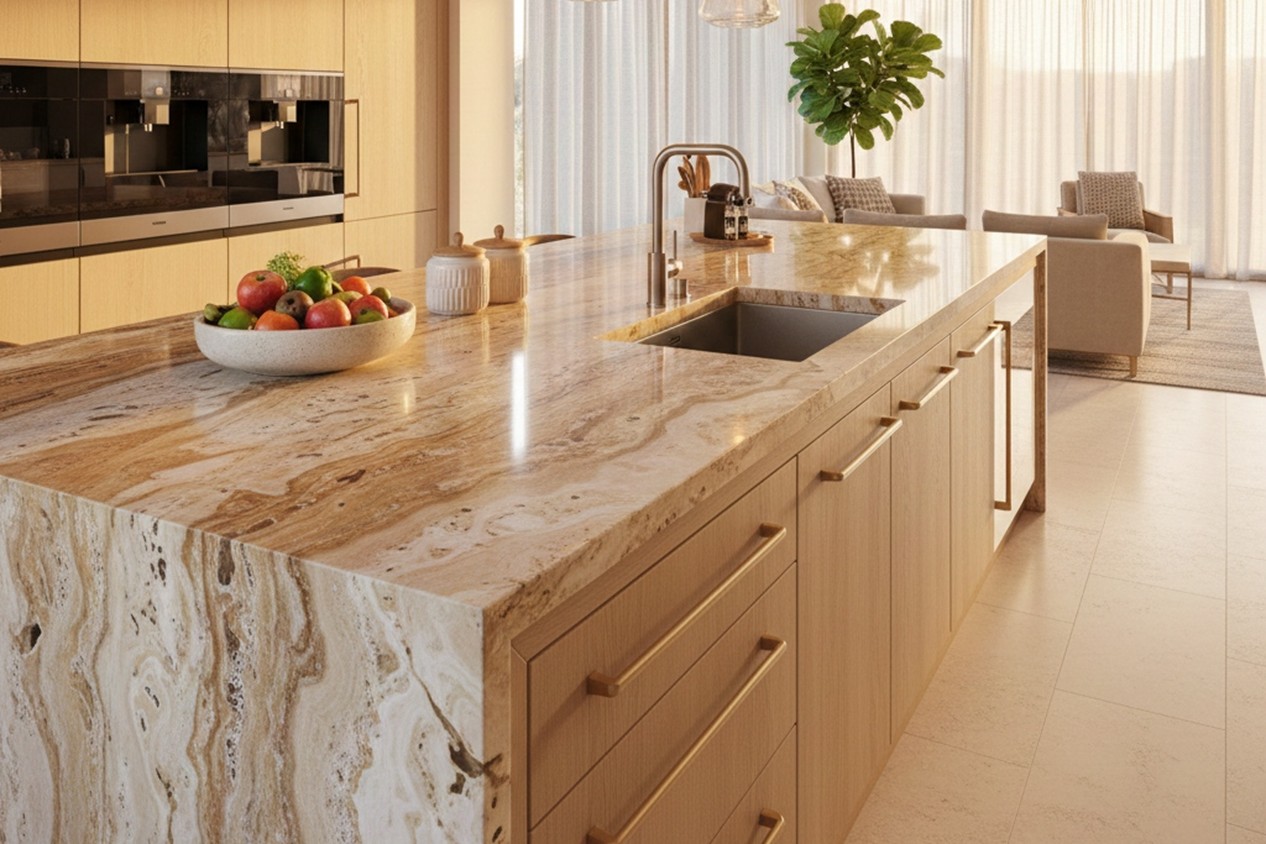
Marble has a reputation for luxury, permanence and timeless beauty. It’s used in bathrooms, kitchens, entryways and living areas because few materials can match its natural depth, movement and elegance. Yet many homeowners are surprised when a marble floor, benchtop or tiled surface starts to look dull far sooner than expected.
The issue usually isn’t poor-quality marble. More often, it’s a mismatch between what marble looks like and how it behaves. Marble is stone, but it’s not indestructible. It’s softer and more reactive than many people realise, which means its polished finish can wear down quickly without the right care. When surfaces have already lost their clarity, professional marble restoration for dull or damaged tiles can often bring back the finish more effectively than repeated household cleaning.
Marble Is Beautiful, But It’s Naturally Vulnerable
Marble is a calcium-based natural stone, which makes it more porous and chemically sensitive than materials such as porcelain, granite or engineered stone. Its surface can be polished to a high shine, but that shine depends on a smooth, finely finished surface. Once microscopic scratches, etching or residue build up, the reflective quality starts to fade.
This is why marble can look stunning when first installed, then gradually appear cloudy, patchy or tired. The change may be subtle at first. A hallway may lose its crisp reflection. Bathroom tiles may begin to look flat. Kitchen splashbacks or floors may develop dull spots in areas exposed to cleaning sprays, moisture or food acids.
The finish hasn’t simply become “dirty”. In many cases, the surface itself has changed.
Everyday Foot Traffic Causes Micro-Scratching
One of the biggest causes of dull marble is regular foot traffic. Shoes carry grit, dust and sand, and those tiny particles act like abrasives. Every step can create fine scratches across the surface. Over time, these marks scatter light instead of reflecting it cleanly, which makes the marble look dull even after mopping.
High-traffic zones usually show wear first. Entryways, kitchen paths, bathroom thresholds and corridors tend to lose their shine faster because they receive constant movement. Rugs and mats can help, but they don’t eliminate wear completely, especially if dirt is trapped underneath them or dragged across the floor.
This is also why marble floors may look uneven. Areas under furniture may remain glossy, while exposed walkways become noticeably flatter.
Acidic Products Can Etch the Surface
Marble reacts poorly to acids. Lemon juice, vinegar, wine, coffee, some bathroom products and many common household cleaners can cause etching. Etching isn’t a stain in the usual sense. It’s a chemical reaction that eats into the surface and leaves a dull, whitish or cloudy mark.
This catches homeowners out because some natural cleaning advice recommends vinegar or citrus-based solutions. Those products may be suitable for other surfaces, but they’re a poor match for marble. Even small spills can leave visible marks if they sit too long.
Bathrooms are especially vulnerable. Soaps, shampoos, cosmetics, toothpaste, limescale removers and harsh sprays can all affect the finish. In kitchens, acidic foods and drinks are the usual culprits. Once etching occurs, wiping harder won’t fix it, because the surface has been physically altered.
Too Much Cleaning Can Make the Problem Worse
Many homeowners respond to dull marble by cleaning more often or using stronger products. Unfortunately, this can accelerate the loss of finish. Abrasive pads, harsh alkaline cleaners, acidic sprays and residue-heavy detergents can all leave marble looking worse over time.
Even products labelled as general-purpose cleaners may be unsuitable. Marble needs pH-neutral cleaning solutions and soft cleaning tools. If a cleaner leaves a film behind, the surface can look smeared or hazy. If it strips or reacts with the stone, it can create dull patches that resemble stubborn dirt.
The frustrating part is that marble can look unclean even when it’s been cleaned thoroughly. That’s usually a sign the issue sits below the surface level.
Moisture, Soap Scum and Residue Build Up Gradually
In wet areas, marble often loses its finish because of repeated exposure to water and residue. Shower walls, bathroom floors and vanity surrounds can develop soap scum, mineral deposits and moisture marks. These layers can settle into the texture of the stone and reduce its clarity.
Sealers help protect marble, but they don’t make it maintenance-free. A sealer slows absorption; it doesn’t create an invisible shield against all wear, acids or surface damage. Once the sealer wears down or becomes compromised, the stone may become more vulnerable to staining and dullness.
This is why marble in bathrooms often needs more care than marble in lower-use decorative areas. The combination of water, products, humidity and cleaning creates constant pressure on the finish.
Polished Marble Shows Wear More Clearly
A polished finish is highly reflective, which means imperfections are easier to see. Small scratches, etching and residue may be less obvious on honed marble, but on polished marble they can stand out quickly because they interrupt the shine.
This doesn’t mean polished marble is a bad choice. It simply needs realistic expectations. A mirror-like finish requires careful cleaning, prompt spill management and periodic professional attention. When homeowners expect marble to perform like ceramic or porcelain tiles, disappointment tends to follow.
Natural stone has character, but it also has limits.
Restoration Is Different From Standard Cleaning
Once marble has become dull due to etching, scratching or worn polish, standard cleaning won’t restore the finish. Restoration may involve specialist cleaning, honing, polishing and sealing, depending on the condition of the surface.
The goal isn’t just to make the marble look cleaner. It’s to refine the surface so it reflects light properly again. Professional restoration can also address uneven wear, mild damage and surface haze in a way household products can’t.
The right approach depends on the stone, the finish, the level of damage and where the marble is installed. A bathroom floor exposed to moisture may need different treatment from a polished entryway or feature wall.
Keeping Marble Looking Better for Longer
Homeowners can extend the life of a marble finish by using pH-neutral cleaners, wiping spills quickly, avoiding vinegar and citrus-based products, placing mats in high-traffic areas and cleaning with soft cloths or mops. Regular dust removal also matters, because grit is one of the main causes of surface wear.
Still, marble is a living material in practical terms. It changes with use. Expecting it to stay flawless without maintenance sets the wrong benchmark.
A better approach is to treat marble as a premium surface that needs informed care. With the right cleaning habits and periodic restoration when needed, marble can keep its elegance for years, even in busy homes.