
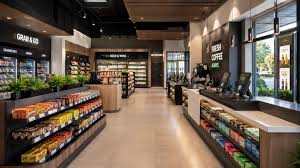
Food retail has always been shaped by habit. Shoppers may say they want more choice, better prices, fresher products and a smoother experience, but beneath all of that sits one powerful driver: convenience. The easier a store makes it to find, compare, grab and go, the more likely customers are to buy confidently, return often and spend more time in the areas that matter.
That’s why layout decisions are never just aesthetic. From aisle width and product placement to chilled display positioning, every part of the store influences how shoppers move and what they notice. Equipment choices matter too. Well-positioned commercial open front fridges can support fast product access, strong visibility and impulse purchasing, particularly in high-traffic food retail environments where hesitation costs sales.
Convenience Is a Behavioural Shortcut
Most food purchases aren’t made after deep comparison. Even when shoppers care about quality, ingredients or value, they still rely on shortcuts. They look for familiar categories, visible products, clear pricing and minimal friction.
A convenient layout reduces the number of decisions a customer has to make. Fresh meals near the entrance, drinks beside grab-and-go food, bakery items close to coffee, ready-made options positioned near checkout zones. These choices aren’t accidental. They respond to real shopping behaviour, where customers often buy under time pressure or with only a loose idea of what they need.
The best layouts feel intuitive. Shoppers don’t want to hunt for lunch, backtrack for a drink or squeeze through congested aisles. When a store removes those small frustrations, the experience feels faster, cleaner and more reliable.
Visibility Still Sells
In food retail, product visibility is one of the strongest layout tools available. Customers are more likely to consider products they can see clearly, especially chilled items that depend on freshness cues. Colour, packaging, lighting and arrangement all influence perceived quality.
Open displays work because they reduce the barrier between customer and product. A door, even a transparent one, can still create a small pause. In some categories, that pause matters. For high-turnover chilled products such as sandwiches, salads, drinks, dairy snacks and takeaway meals, easy access can increase browsing and encourage quick selection.
Visibility also helps retailers manage range. A full, well-organised display signals abundance and freshness. A cluttered or poorly stocked unit can create the opposite impression, even when the products themselves are high quality.
Store Flow Shapes Basket Size
Convenience doesn’t mean placing everything at the front of the store. Smart layout planning balances speed with exposure. Retailers want customers to move naturally through key zones without feeling manipulated or delayed.
This is why staple products are often positioned deeper in the store, while impulse and convenience categories sit along high-traffic paths. The goal is to make essential shopping easy while giving customers reasons to add complementary items.
A customer buying a ready-made meal may also pick up a drink, dessert or snack if those products are nearby. Someone buying fresh produce may notice chilled dips, cheeses or prepared salads if the categories are arranged logically. These small layout decisions can lift average transaction value without adding pressure to the customer experience.
Friction Is the Enemy of Fresh Food Sales
Fresh and chilled products are particularly sensitive to friction. If the product looks hard to access, the display feels crowded or the category is difficult to compare, customers may skip it entirely. Unlike shelf-stable goods, chilled food often competes with immediate hunger, time constraints and freshness expectations.
Retailers have to make the decision feel easy. The product should be visible from a distance, accessible without effort and arranged in a way that helps customers choose quickly. Clear category grouping, front-facing stock and sensible product adjacencies all support that outcome.
Temperature control and presentation also play a role. Customers need to trust that chilled food has been stored properly. Clean, well-maintained refrigeration contributes to that trust, while poor presentation can quietly undermine it.
Convenience Is Also Operational
Retail layout isn’t only about the customer. Staff efficiency matters too. A convenient layout should support restocking, cleaning, monitoring and rotation. If a display is difficult to refill or disrupts customer flow during busy periods, it creates hidden labour costs.
This is where equipment placement becomes strategic. Chilled displays need to sit where they attract attention, but they also need enough clearance for staff access and customer movement. High-performing food retail layouts usually come from balancing sales psychology with practical store operations.
A display that looks good on a floor plan may fail if it creates congestion, blocks sightlines or forces staff into inefficient routines. Convenience has to work on both sides of the counter.
Smaller Stores Make Convenience Even More Important
As urban retail formats become more compact, every square metre has to work harder. Convenience stores, petrol retailers, grocers, cafés and specialty food shops often need to combine speed, range and presentation in limited space.
In these settings, layout decisions become sharper. There’s less room for dead zones, awkward corners or confusing category placement. Customers expect fast service and immediate product recognition. Retailers need displays that support impulse purchases while keeping the space open and easy to navigate.
Compact formats often rely heavily on chilled grab-and-go ranges because they meet modern shopping patterns. Breakfast on the way to work. Lunch between meetings. Dinner picked up after a commute. The layout has to match those moments.
Technology Hasn’t Replaced Physical Convenience
Online ordering, delivery apps and click-and-collect have changed food retail, but they haven’t removed the importance of physical store design. In fact, they’ve raised expectations. Customers now expect speed everywhere.
When people enter a store, they compare the experience against the convenience they get digitally. Slow navigation, poor signage and difficult access feel more frustrating than they once did. Physical retail has to justify itself through immediacy, sensory appeal and ease.
The advantage is that stores can still do what digital channels can’t. They can use aroma, freshness, colour, movement and impulse to influence decisions in real time. A strong layout turns those advantages into sales.
The Best Layouts Feel Effortless
Convenience works best when customers don’t consciously notice it. They simply find what they need, see something appealing, make a quick decision and leave satisfied.
For food retailers, that outcome comes from dozens of connected decisions: where products sit, how categories flow, how chilled ranges are displayed, how easily staff can maintain the space and how naturally shoppers move from one need to the next.
Convenience still drives food retail layout because it matches how people actually shop. Not in theory, not in ideal conditions, but in real life, when they’re hungry, busy, distracted and looking for the easiest good choice.