
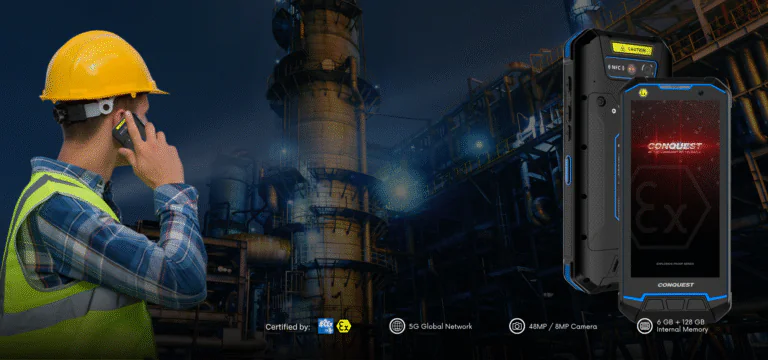
An explosion-proof phone is a specially designed mobile device that prevents ignition in dangerous areas by using sealed components, current-limiting circuits, and protective housings that meet strict safety certifications like ATEX, IECEx, or Class I Division 1/2.
What Is an Explosion-Proof Phone?
These specialized devices are built to work safely in areas where flammable gases, dust, or vapors could ignite. They meet strict safety standards and use special designs to prevent sparks or heat that could cause explosions.
Defining Explosion-Proof Phones
An explosion-proof phone is a rugged mobile device certified to work in hazardous environments without causing ignition. You’ll see these in oil refineries, chemical plants, mining sites, and grain processing facilities.
They carry certifications like ATEX, IECEx, or UL, which prove they meet international safety standards. Your regular smartphone? It doesn’t have these and might create dangerous sparks or heat.
The construction is what really sets them apart. Explosion-proof phones use sealed housings made from tough metals that can contain any internal explosions. Anti-spark circuits and temperature controls are built in too.
They can handle extreme conditions that would destroy a regular phone. These are waterproof, dustproof, and shockproof to military-grade standards. Use them in nasty weather, underwater, or after a rough drop—they just keep going.
Intrinsically Safe vs. Explosion-Proof Devices
Intrinsically safe devices limit electrical energy to levels too low to cause ignition in explosive atmospheres. They prevent sparks before they happen by controlling the power flowing through circuits.
Explosion-proof devices take a different approach. They’re built to contain any sparks or explosions inside their heavy enclosures. This stops ignition sources from reaching flammable materials outside the device.
Both types protect you in hazardous areas but work differently. Intrinsically safe phones use less power and are often lighter. Explosion-proof phones can handle more powerful components because they contain rather than prevent ignition sources.
How They Work in Explosive Atmospheres
These phones prevent ignition through multiple safety features working together. The sealed enclosure blocks sparks from escaping and keeps flammable gases from entering the device.
Inside, special circuits limit electrical current and voltage to safe levels. This prevents overheating and reduces spark risk during normal operation or if the phone gets damaged.
Key safety features include:
- Protected batteries with temperature monitoring
- Reinforced screens that won’t shatter into sparks
- Sealed ports and buttons
- Heat-dissipating materials
The phones also control surface temperature to stay below ignition points for gases or dust in your area. You can make calls, send messages, and use apps without creating explosion risks around you.
Certification and Compliance Standards
Explosion-proof phones have to meet strict global standards to ensure they won’t ignite flammable materials in dangerous work environments. ATEX and IECEx certifications cover different hazardous zones, and North American Class II ratings focus on combustible dust risks.
ATEX and IECEx Certifications Explained
ATEX is the European standard for equipment used in explosive atmospheres. It divides hazardous areas into zones based on how often flammable materials are present.
Zone 0 means explosive atmosphere is continuously present, Zone 1 means it’s likely during normal operations, and Zone 2 means it’s unlikely but still possible. IECEx is the international version—kind of a universal passport for explosion safety.
Many manufacturers now go for both ATEX and IECEx certification to make things easier for companies working in multiple countries. This way, you don’t have to buy a different phone for every country your team visits.
Both certifications test whether your phone can prevent ignition under specific conditions. The testing process examines circuits, battery design, housing materials, and temperature limits.
You’ll see ratings like “Ex ia IIC T4” on certified devices, which tells you exactly what hazards the phone can handle safely.
Class II, Division 1 and Division 2 Ratings
North American workplaces use a different classification system focused on combustible dust. Class II covers areas where dust from grain, coal, metal, or chemicals can create explosive conditions.
Division 1 areas are places where combustible dust is present during normal operations. Your phone must be certified for Division 1 if ignitable concentrations exist regularly or frequently.
Division 2 areas only see dangerous dust levels during abnormal situations like equipment failures. Phones rated for Division 2 offer protection for less hazardous zones where dust buildup is controlled.
The key difference is risk frequency. Division 1 demands higher protection because exposure happens more often. Make sure your phone’s rating matches your actual work zone classification.
Safety Standards in Hazardous Environments
Safety standards exist because regular consumer phones can spark, overheat, or create electrical faults that ignite flammable gases or dust. Explosion-proof phones use current-limiting circuits and sealed components to eliminate these risks.
The standards define maximum surface temperatures, energy levels, and enclosure requirements. For example, a T4 temperature rating means the device surface won’t exceed 135°C (275°F) even under fault conditions.
Your phone also needs proper ingress protection (IP ratings) to keep dust and moisture out of sensitive electronics. Most certified phones carry IP66 or IP68 ratings for complete dust protection and water resistance.
This dual protection addresses both explosion risks and environmental durability.
Understanding International Requirements
Different countries enforce their own approval processes even when using similar technical standards. Europe requires ATEX marking before you can legally use equipment in hazardous areas.
Countries following IECEx accept certificates from member nations without extra testing. The United States and Canada use the Class/Division system managed by organizations like UL and CSA.
If you operate across borders, look for phones with multiple certifications listed. This saves you from compliance headaches when moving equipment between facilities.
Some regions also want extra documentation—installation manuals in local languages or specific labeling formats. Always check with your safety officer about what certifications your location recognizes.
Buying a phone with only ATEX approval won’t help if your North American facility needs Class II Division 1 certification.
Key Features and Advantages
Explosion-proof phones blend specialized protection with modern communication tools to keep you safe and connected in hazardous work environments. You get rugged construction, smart connectivity, and reliable performance built for high-risk industrial settings.
Durability and Build Quality
You’ll notice explosion-proof phones use heavy-duty materials and some clever engineering to survive extreme conditions. The housings are usually made from corrosion-resistant aluminum alloy die casting that keeps out dust, dirt, and water spray.
These phones meet strict environmental protection ratings. Most models carry IP66, IP68, or even IP69K certifications, which means they resist both dust and water ingress.
Impact protection rated at IK10 ensures your phone survives drops and mechanical shocks that would destroy regular devices. Temperature resistance is another biggie with these phones.
They operate reliably in ranges from -40°C to +70°C, so you can use them in freezing cold storage or hot industrial plants. The sealed designs include weatherproof keypads you can use while wearing gloves, hermetically sealed switches, and interfaces protected with rubber sealing rings.
Connectivity and Smart Functions
Modern explosion-proof phones offer connectivity options that go way beyond basic calls. Many models now include IoT integration that connects with cloud platforms for real-time monitoring and analytics.
You can access environmental data, track assets, and monitor worker locations from a central dashboard. Some devices support 5G for rapid data transmission, letting you use AR-based remote assistance and stream video from the field to command centers during emergencies.
GPS tracking built into these phones helps supervisors find you instantly if you need help. You’ll also benefit from remote diagnostics and monitoring features.
These systems send automated alerts about potential issues and let technicians troubleshoot problems without entering hazardous zones. The phones integrate with Public Address and General Alarm systems on offshore installations and industrial sites.
Push-to-Talk and Communication Tools
PTT functionality gives you instant communication with your team at the push of a button. It’s like a walkie-talkie—reach multiple people at once, no dialing needed.
This is crucial during emergencies or just routine check-ins. Advanced audio processing helps you hear clearly in noisy environments.
The phones use noise cancellation to filter out background sounds from heavy machinery, wind, or industrial processes. High-quality microphones and speakers make sure your messages get through without distortion.
Emergency call functions are built into most models. You get dedicated buttons for duress alerts that contact emergency services right away.
Some phones include audible alarms and flashing lights to notify nearby personnel when you activate an emergency call. It’s a small thing, but it can make a big difference.
Battery Performance and Reliability
Your explosion-proof phone uses intrinsically safe lithium-ion batteries designed to prevent sparks and heat. These batteries meet strict safety standards but still give you enough power for a full shift.
You don’t need to stress about battery-related ignition risks in explosive atmospheres. Battery life varies by model and usage, but most devices are built for long operation in remote locations.
They optimize power for essential communication instead of running a ton of apps. Some models offer hot-swappable batteries, so you can swap out the power source without shutting down the device.
This keeps you connected during long shifts or multi-day operations where charging isn’t easy.
Choosing the Right Explosion-Proof Phone
Selecting the right explosion-proof phone means matching certifications to your hazard zones, understanding maintenance, and working with providers who actually know what they’re talking about.
Matching Devices to Your Work Environment
Your work environment determines which certifications your phone needs. ATEX Zone 1 areas require devices with higher protection levels than Zone 2 locations.
IECEx standards apply globally, while Class I Division 1 and 2 certifications are used in North America. Check your site’s hazard classification before choosing a device.
Oil and gas operations often need Zone 1 or Class I Division 1 rated phones. Chemical plants and refineries typically require ATEX or IECEx certifications.
Manufacturing facilities with occasional hazards may only need Zone 2 protection. Consider your daily work conditions too.
Long shifts in cold weather need phones with solid battery life and low-temperature performance. Field inspection teams might want devices with good cameras.
Workers wearing thick gloves need screens that respond to gloved hands. Sometimes, it’s the small details that really matter.