
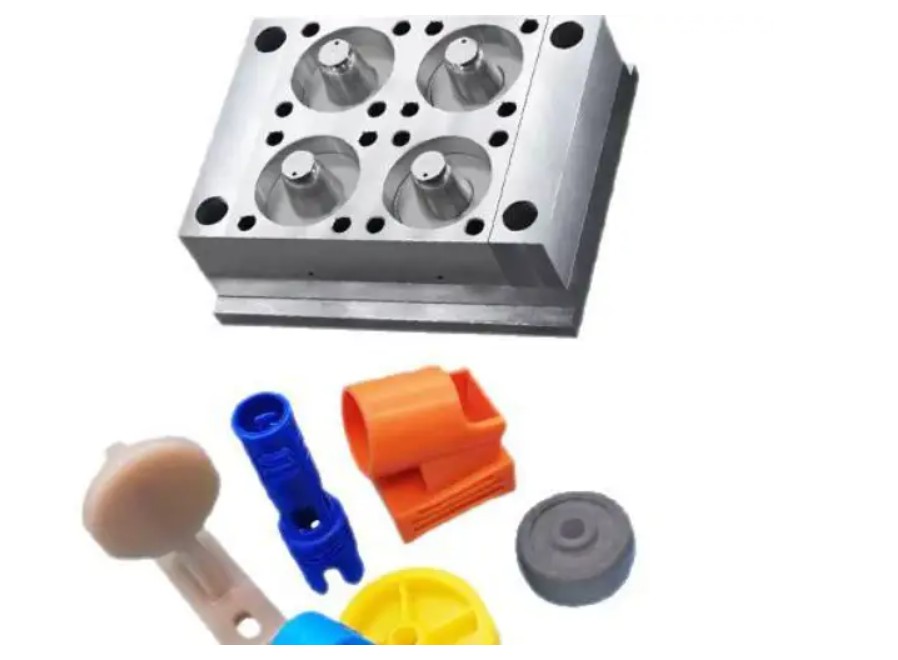
Custom plastic injection molding is one of the most reliable and scalable ways to produce high-quality plastic parts. It allows manufacturers to create complex, durable components with remarkable consistency at a competitive cost. Whether for automotive, medical, consumer, or industrial use, understanding the full molding journey—from idea to finished product—is essential for project success.
Modern manufacturers rely on custom plastic injection molding to produce durable, precise, and complex components efficiently. Like LZ Tooling, a custom plastic part manufacturer,delivers high-quality molded parts using advanced materials and precision-engineered molds, ensuring smooth finishes and reliable performance. Their expertise in design and manufacturing highlights how precision and material mastery drive product quality.
How the Process Works
Injection molding transforms raw plastic pellets into precise molded parts through a repeatable four-step cycle:
- Clamping – The two halves of the mold are securely closed.
- Injection – Heated plastic is injected into the mold cavity under pressure.
- Cooling – The molten plastic solidifies as it cools within the mold.
- Ejection – The mold opens and ejector pins push out the completed part.
This process supports mass production, tight tolerances, and a wide selection of resins, making it ideal for both functional and aesthetic applications. Once the mold is built, every cycle delivers parts with uniform quality and shape.
Project Development Stages
A custom injection molding project generally follows four structured phases:
1. Requirement Definition
Start by clarifying the part’s function, environment, and performance targets. Material selection depends on strength, flexibility, heat tolerance, and compliance standards (FDA, RoHS, automotive). Common materials include PP, ABS, PE, PC, and Nylon. Engineers then prepare 3D models and technical drawings to define exact tolerances and surface finishes.
2. Design for Manufacturing (DFM)
Next, engineers review the design for moldability and cost efficiency. Mold design determines the number of cavities, cooling layout, and gating method. Tooling material—steel or aluminium—is chosen based on production volume. Before finalizing tooling, rapid prototypes (via 3D printing) help confirm fit and function.
3. Tooling and Testing
The mold is machined with CNC and EDM precision. Initial “T1” trial parts are produced and inspected for accuracy. Adjustments are made until the mold meets every specification. Once approved, the tool is locked in for production.
4. Production and Quality Control
During mass production, technicians establish stable machine settings—temperature, pressure, and cycle time—to maintain consistent results. Ongoing inspections ensure every batch meets dimensional and visual standards. Certified systems such as ISO 9001 or IATF 16949 often guide the quality process. Finished parts may also receive secondary operations like trimming, painting, or ultrasonic welding.

Design Guidelines for Better Molding
To ensure durability, manufacturability, and low defect rates, several DFM principles are key:
- Uniform Wall Thickness: Keep walls consistent (1.5–4 mm). Uneven walls can lead to warping or sink marks.
- Draft Angles: Add slight tapers (0.5–1° per side) so parts can be ejected easily without surface damage.
- Ribs and Bosses: Use ribs to add stiffness; keep rib bases 50–70% of wall thickness and limit height to 2.5–3× wall thickness.
- Rounded Corners: Replace sharp corners with smooth radii to reduce stress and improve plastic flow.
- Avoid Undercuts: If undercuts are unavoidable, use side actions or flexible features to simplify ejection.
Choosing the Right Material
Material choice determines performance, durability, and cost.
- Commodity plastics (PP, PE, PS): cost-effective for general products.
- Engineering plastics (ABS, PC, Nylon): strong, heat- and impact-resistant.
- High-performance plastics (PEEK, PEI): ideal for demanding applications.
Key factors to evaluate include tensile strength, impact resistance, heat deflection temperature, chemical resistance, and shrinkage rate. Proper resin selection ensures parts maintain integrity under real-world conditions.
Partnering for Success
Selecting an experienced injection molding partner is crucial. Look for one with:
- Proven industry experience and strong design-for-manufacturing support
- Advanced molding equipment and automation capabilities
- In-house tooling, molding, and finishing services for full integration
- Certified quality systems ensuring repeatable, high-precision output
A collaborative manufacturer can refine your design, reduce costs, and accelerate production while maintaining strict quality standards.
Conclusion
Custom plastic injection molding combines design expertise, engineering precision, and advanced machinery to deliver scalable and repeatable production. Companies can efficiently turn their ideas into high-performance plastic products by following sound design principles, choosing suitable materials, and partnering with a skilled manufacturer. In essence, the success of injection molding lies in the harmony between intelligent design and precise execution—resulting in parts that perform flawlessly and cost-effectively at scale.