
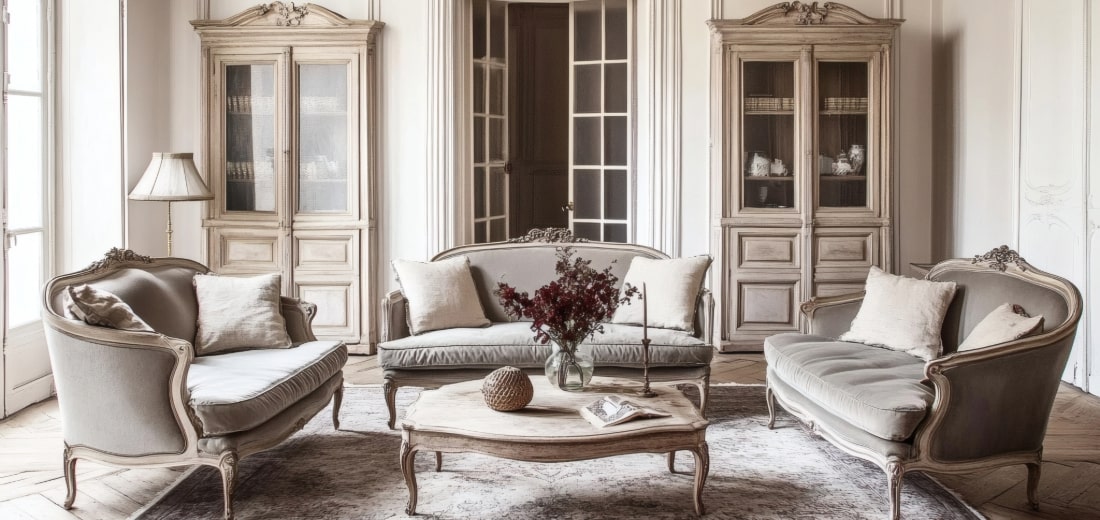
Provincial design has a rare kind of staying power. It draws from European country homes, classical proportions, natural materials and quiet decorative detail, yet it can still feel completely at home in a contemporary Australian setting. The challenge is restraint. When every surface, fitting and furnishing tries to announce the style at once, Provincial design can tip from elegant to theatrical very quickly.
The best results come from balance. A new Melbourne home with Provincial styling and luxury finishes can feel timeless when its character is built into the architecture, not forced through excessive decoration. It’s less about copying a period look and more about using form, texture and proportion to create warmth, refinement and longevity.
Start With Proportion, Not Decoration
Provincial interiors work best when the room itself feels composed before the styling begins. Ceiling height, window placement, joinery scale, architraves, cornices and door profiles all shape the feeling of permanence. These elements create the architectural rhythm that makes the style feel settled rather than applied.
A tall doorway with elegant moulding, a well-scaled fireplace surround or a beautifully proportioned kitchen island can do more for the overall mood than layers of ornate accessories. When the bones are right, the home doesn’t need to be overfilled. The design already has authority.
This is where many overdone interiors go wrong. They rely too heavily on obvious markers: carved furniture, distressed finishes, floral upholstery, antique-look everything. Used without discipline, these details flatten the design into a theme. Provincial style feels more sophisticated when the references are integrated quietly.
Let Natural Materials Carry the Character
Timeless Provincial design leans heavily on materials that age well. Stone, timber, linen, ceramic, wrought metal and brushed brass all bring texture without needing to compete for attention. Their value comes from depth, variation and tactility.
A natural stone benchtop, for example, can add elegance without feeling decorative for decoration’s sake. Timber flooring softens formal detailing. Linen curtains bring movement and ease. Handmade tiles can introduce gentle irregularity, especially in kitchens, laundries and bathrooms where too much symmetry can feel cold.
The key is to avoid making every material highly expressive. A room doesn’t need heavily veined stone, patterned tiles, ornate cabinetry, decorative hardware and feature lighting all at once. One or two strong moments are enough. The rest should support the atmosphere.
Keep the Palette Soft, Not Bland
Provincial colour palettes are often associated with whites, creams, greys and muted neutrals, but timeless doesn’t mean washed out. A successful palette has subtle contrast. Warm whites, mushroom tones, soft taupe, dusty blue, sage, charcoal, aged bronze and natural oak can all sit comfortably within the style.
What matters is softness and continuity. Harsh contrasts can make the interior feel more graphic than graceful, while too many similar pale tones can make it feel flat. A slightly deeper island bench, a stone fireplace, darker hardware or timber furniture can give the room structure.
Colour should feel collected rather than matched. That’s part of the charm. Provincial homes don’t need everything to look freshly coordinated; they benefit from the sense that materials and finishes have been chosen over time with care.
Use Detail With Intention
Decorative detail is essential to Provincial design, but it needs to be edited. Profiled cabinetry, panelled walls, turned legs, fluted glass, pendant lighting, decorative cornices and elegant tapware can all be beautiful. Trouble starts when every detail has the same intensity.
A refined home gives the eye somewhere to rest. Flat plaster beside detailed joinery. Plain linen beside a carved timber table. Simple stone beside a more expressive pendant. This contrast lets special features stand out without overwhelming the room.
Hardware is a good example. Traditional knobs and handles can add charm, but they don’t need to be oversized or overly ornate. Aged brass, pewter or blackened metal can offer just enough old-world character while still feeling sharp and current.
Avoid the Showroom Trap
Provincial style can lose its appeal when everything looks too new, too polished or too perfectly matched. A home should feel lived in, even when it’s newly built. That doesn’t mean cluttered. It means layered.
A vintage-style mirror, a textured rug, books, ceramics, artwork and soft furnishings can make a space feel personal. The trick is to avoid filling every blank surface. Provincial design has an intimate quality, but it still needs breathing room.
Furniture should also feel generous rather than fussy. Deep sofas, upholstered dining chairs, substantial timber tables and well-made occasional pieces suit the style beautifully. Pieces with classic lines often work better than anything too decorative. Comfort matters. A Provincial home should never feel like a room you’re afraid to sit in.
Blend Traditional Cues With Modern Function
A timeless Provincial home still needs to work for contemporary life. Kitchens need practical storage, bathrooms need durable finishes, laundries need efficiency and living spaces need easy flow. The style shouldn’t get in the way of daily use.
Modern integration is what keeps the look relevant. Concealed appliances, efficient lighting, clean-lined tapware, underfloor heating, smart storage and contemporary floor plans can sit comfortably within a Provincial framework when the finishes are handled carefully.
This balance is especially important in Australian homes, where light, climate and lifestyle differ from the European references behind the style. Larger openings, indoor-outdoor flow and brighter natural light can make Provincial design feel fresher and more relaxed.
Choose Elegance Over Excess
Provincial design feels timeless when it’s confident enough to be quiet. It doesn’t need every chair leg carved, every wall panelled or every fitting antique-inspired. The most enduring homes use the style as a language, not a costume.
That means prioritising proportion, material quality, soft contrast and thoughtful detail. It means allowing some rooms to feel simpler than others. It means choosing finishes that’ll mature gracefully rather than trends that demand attention for a season.
When handled with restraint, Provincial design offers something deeply appealing: warmth without heaviness, elegance without stiffness, and character without clutter. It feels established from the beginning, yet flexible enough to evolve over time. That’s what makes it timeless.