

Modern football fans often face information overload when tracking multiple leagues, teams, and matches. An a website offering advanced football analytics for fans solves this challenge by allowing users to narrow down data through smart filtering tools. Instead of scrolling through large datasets, users can instantly focus on the exact competition, team, or statistic they need. With real-time updates as fast as 0.3 seconds and accuracy reaching 99.8%, filtered results remain both precise and current.
Why filters matter for modern football analysis
Football data platforms now cover hundreds of competitions and thousands of matches each season. Without filters, users would need to manually search through irrelevant information, which wastes time and reduces efficiency. Filtering allows instant narrowing by league, date, team, or match status, making navigation significantly faster.
Advanced filtering speeds up navigation and improves football data analysis
This structured approach supports different usage scenarios, including live match tracking, post-match analysis, and season-long monitoring. The system processes requests quickly through cloud synchronization and optimized databases. As a result, users receive updated information without delays, even during peak match hours.
| Filter category | User benefit |
| League selection | Focus on specific competitions |
| Date range | Track fixtures within a timeframe |
| Match status | Find live, finished, or upcoming games |
| Team filter | Monitor favorite clubs easily |
Filtering Matches by League and Competition
Many users follow multiple tournaments such as domestic leagues, continental competitions, and international events. League filters allow quick switching between competitions without returning to the homepage. This is especially useful during busy match nights when several tournaments take place simultaneously.
The system groups competitions logically, helping users locate major leagues within seconds. Real-time synchronization ensures standings, fixtures, and results update instantly after each match event. This feature supports continuous tracking of title races, qualification battles, and relegation zones.
| League filter option | Practical use |
| Domestic leagues | Track season progress |
| Continental tournaments | Follow knockout stages |
| International matches | Monitor national teams |
| Favorites list | Quick access to selected leagues |
Using Date and Time Filters for Match Planning
Date filters help users organize their viewing schedule and research workflow. Instead of checking matches day by day, users can display an entire week or a custom time range. This feature is valuable for fans who plan viewing sessions around major fixtures. It also helps users avoid missing important matches by providing a clear overview of upcoming schedules in one screen.
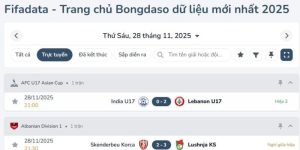
Flexible time filters make fixture planning and historical analysis quick and easy
Time-based filtering also supports post-match analysis. Users can quickly retrieve results from a specific round or matchday to evaluate performance trends. Fast query processing ensures smooth operation even when searching large historical datasets. This makes it easier to compare different periods and identify patterns across multiple weeks or months.
| Time filter | Use case |
| Today
This week |
Quick daily overview
Plan viewing schedule |
| Custom range | Research specific periods |
| Matchday filter | Analyze round-by-round performance |
Team-based filters for focused tracking
Fans often prioritize specific clubs rather than entire competitions. Team filters display all related matches, statistics, and standings in one place. This eliminates the need to search across multiple league pages.
The feature supports both short-term and long-term monitoring. Users can track recent form, upcoming fixtures, and performance indicators such as goals scored, conceded, or expected goals (xG). Automatic updates ensure that team data reflects match events almost immediately.
| Team filter function | Insight provided |
| Recent matches | Evaluate current form |
| Upcoming fixtures | Prepare for key games |
| Season statistics | Measure overall performance |
| Head-to-head | Compare opponents |
Advanced Filters for Deeper Statistical Analysis
Beyond basic navigation, advanced filters allow users to refine data based on performance metrics. These tools are designed for users who want tactical or analytical insights rather than simple results. Metrics such as possession, shots, xG, and defensive actions can be isolated for comparison.
Visualization tools like heat maps and shot charts become more meaningful when combined with filtered datasets. Users can identify patterns such as attacking focus areas or defensive weaknesses. High processing speed ensures that complex queries still return results quickly.
| Advanced filter | Analytical value |
| Expected goals (xG) | Measure chance quality |
| Shot location | Identify attacking zones |
| Possession range | Analyze control levels |
| Defensive actions | Evaluate team structure |
Mobile Optimization for Filter Efficiency
Most users access football data through smartphones, so filter performance must remain smooth on mobile devices. Responsive layouts adjust automatically to smaller screens without losing functionality. Lightweight scripts reduce loading time and minimize mobile data usage.
Touch-friendly controls allow quick selection of leagues, teams, or date ranges with minimal steps. Cloud-based processing ensures that filtered results load quickly even on average network connections. This makes advanced filtering practical for daily, on-the-go use.
| Optimization feature | User Impact |
| Responsive interface | Clear display on all screens |
| Data compression | Lower mobile data usage |
| Cloud processing | Fast query results |
| Lightweight scripts | Smooth performance |
Comparing with community-based data sources
Some fans previously relied on community-curated platforms such as the football statistics website Tumblr for niche data and visual summaries. While these sources provide interesting insights, they often lack real-time updates and structured filtering tools. Manual browsing can make it difficult to locate specific information quickly.
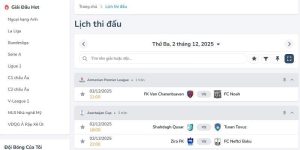
Real-time updates and smart filters outperform manual community data browsing
Modern analytics platforms address this gap by combining automated data collection with powerful search and filtering systems. Users can move from broad overviews to detailed match-level analysis within seconds. This shift reflects growing demand for speed, accuracy, and structured access to football data.
How filters improve daily user experience
Filtering tools support both quick checks and extended analysis sessions. A fan can open the platform, select a favorite league, filter today’s matches, and access live statistics within seconds. This streamlined workflow reduces friction and encourages frequent daily visits.
During major match nights, efficient filtering becomes even more valuable. Users can isolate live games, monitor multiple scorelines, and switch between matches without losing context. Stable infrastructure and CDN distribution ensure consistent performance even when traffic surges.
| Usage scenario | Filter advantage |
| Live match tracking | Instant access to active games |
| Multi-league nights | Quick switching between competitions |
| Daily check-ins | Faster routine browsing |
| Research sessions | Efficient data narrowing |
Conclusion
Effective filtering transforms large football datasets into practical, easy-to-use information. By allowing users to narrow results by league, team, date, and performance metrics, modern platforms support both casual fans and data-focused analysts. Real-time synchronization, high accuracy, and mobile optimization ensure that filtered data remains reliable in every situation. As football information continues to expand, smart filtering will remain essential for finding exactly what matters quickly, clearly, and efficiently.