You want better balance and less slipping during workouts or around the house. Grip socks give you traction, comfort, and stability so you can move with more confidence.
In this post, you’ll learn what grip socks are, why they help in yoga, Pilates, recovery, and daily life, how to choose the right pair, and which types fit your needs. Keep reading to find the best fit for your feet and activities.
What Are Grip Socks?
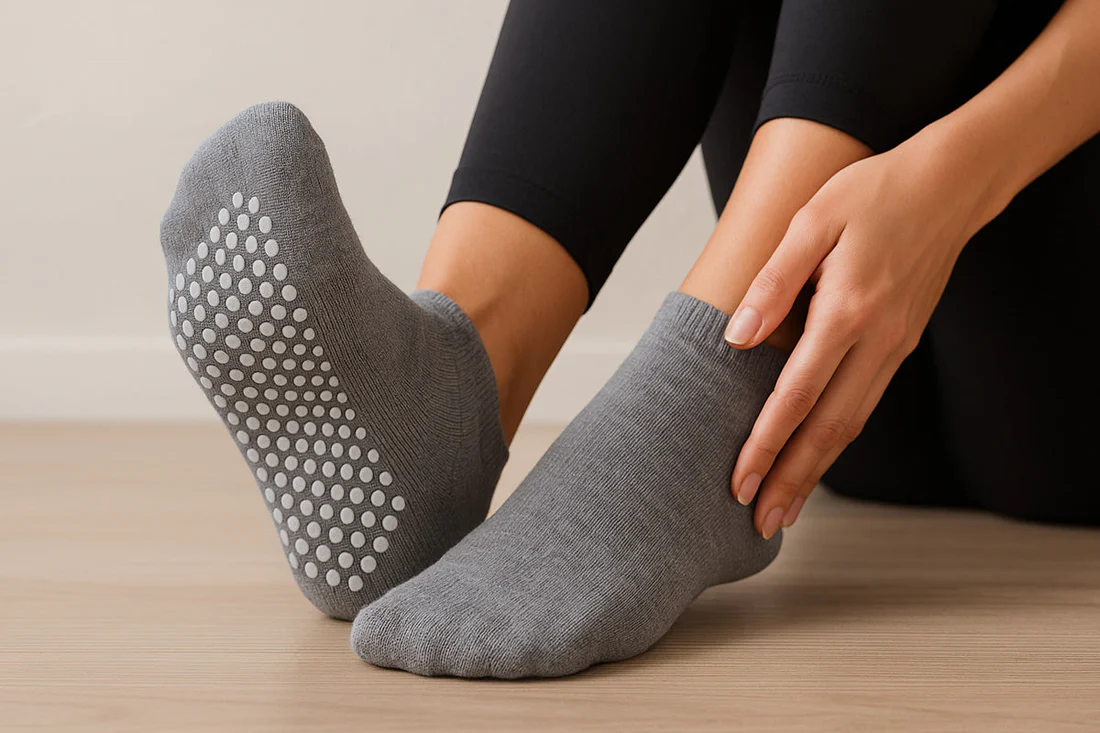
Grip socks are regular socks with rubber or silicone patterns on the sole that stop slipping and help you stay steady on smooth floors. They work for yoga, pilates, barre, hospital stays, and home use by adding traction where plain socks don’t.
How Grip Socks Work
Grip socks use raised dots, lines, or hexagonal treads of rubber or silicone glued or molded onto the fabric sole. Those grips increase friction between your foot and the floor or mat so your heel and toes don’t slide during poses or quick moves.
The sock fabric still stretches and breathes like cotton, bamboo, or synthetic blends, while the grip layer stays in contact with the surface. This combination keeps your foot stable without needing shoes.
Popular Types and Styles
You’ll find full-sole grip socks with continuous rubber patterns and split-sole styles with grips only under the ball and heel. Full-sole suits studio classes; split-sole gives more flexibility for dance or barefoot feel.
Materials vary: cotton for comfort, polyester blends for sweat control, and thermal knits for cold floors. Some have ankle straps, low-cut designs, or toe separations for better fit and use in different activities.
Comparison with Regular Socks
Regular socks lack textured grip and let your foot slide on smooth surfaces, increasing fall risk during exercise. Grip socks add targeted traction so you can hold poses and change direction safely.
Regular socks might be softer or cheaper, but they won’t protect you from slipping. Grip socks trade a bit of smoothness for function, making them a better choice when balance and footing matter.
Key Benefits of Grip Socks
Grip socks give you better footing, hold your foot steady inside shoes, and cut down rubbing that causes blisters.
Stability and Control in Movement
You get a firmer base for quick steps and turns. The rubber or silicone dots on the sole keep your foot from sliding inside shoes or on smooth floors.
This helps when you sprint, pivot, or perform balance moves in yoga and Pilates.
A snug fit and anti-slip cuff keep the grips aligned under your arch and heel.
That reduces wobble and makes your stance more predictable during fast cuts or rehab exercises.
Enhanced Traction and Control
Traction comes from increased friction between your sock and the surface.
On polished gym floors, mats, or inside cleats, grips catch the surface and stop unwanted slips.
You can push off harder and change direction with less risk of sliding.
This matters in indoor sports, studio classes, and hospital halls where smooth surfaces are common.
Comfort and Blister Prevention
A closer fit means less internal movement and fewer hot spots.
Grip socks hold the foot in place so skin won’t rub against fabric as much.
Many use moisture-wicking blends to keep feet dry, lowering blister risk further.
Padding in heel and toe areas adds comfort without bulk, so you stay secure and pain-free.
Top Uses and Types of Grip Socks
These socks add traction, protect your feet, and suit different activities. You’ll find styles made for studio classes, sports performance, and daily non-slip needs.
Pilates Grip Socks for Studio Workouts
Pilates grip socks have rubber dots under the ball and heel to stop slipping on reformers and mats. They often leave toes exposed or use thin fabric so you can flex your toes and feel the floor.
Choose pairs with moisture-wicking fabric and a snug fit so the grips stay flat and contact the surface. Look for padded arches or extra heel cushion if you do longer sessions.
If your studio requires socks, pick a branded pilates grip sock with full-sole traction and a secure ankle cuff. That prevents the sock from sliding down during dynamic moves.
Best Grip Socks for Athletes
Athletic grip socks focus on locking your foot inside a shoe or cleat. They use silicone strips across the insole area and may have left/right shaping for better fit.
For soccer or court sports, pick thin, breathable blends (nylon/elastane) with wide grip zones and reinforced heels. This reduces blisters and keeps your foot from shifting during sprints and cuts.
Check durability: look for tightly bonded grips and double-stitched seams if you train often.
Everyday Non-Slip Socks
Everyday non-slip socks look like cozy house socks but use full rubber treads to prevent falls on tile or hardwood. They’re thicker and often fleece-lined for warmth.
Use them at home, in hospitals, or when you need safer footing while carrying items. Choose color-coded or washable options if you use them for elderly care or rehab.
Pick socks with a gentle cuff and seamless toe to avoid pressure on sensitive feet.
Grip Socks Shopping Guide
Find socks with strong silicone grips, breathable fabric, and a snug fit. Look for clear size charts, brands with good returns, and multi-pack value deals that save money on orders over $50.
Choosing the Right Pair
Pick socks designed for your activity: yoga and Pilates need full-coverage silicone on heel and ball. For home use, thicker fuzzy options add warmth but can cost more. Check material: cotton blends feel soft; polyester/spandex wick moisture. Inspect grip pattern photos—dense dots last longer. Watch for sold out items if a style is popular.
Sizing, Fit, and Sleeves
Measure your foot length and match the brand chart. Aim for a snug fit that won’t bunch; toe seams should sit flat. Some socks include ankle sleeves for extra support—choose sleeves if you want mild compression. If a size runs tight, size up one.
Popular Brands and Price Points
Budget packs often start around €13.95 for multi-pairs. Mid-range brands offer better grip patterns and durability. Premium labels charge more but add cushioning and fit tech. Compare reviews and return policies before buying.
Online Shopping Tips
Read customer photos to check grip wear. Buy from retailers with easy returns and clear size guides. Watch for bundle deals and free shipping on orders over $50. If a color shows “sold out,” sign up for restock alerts.