
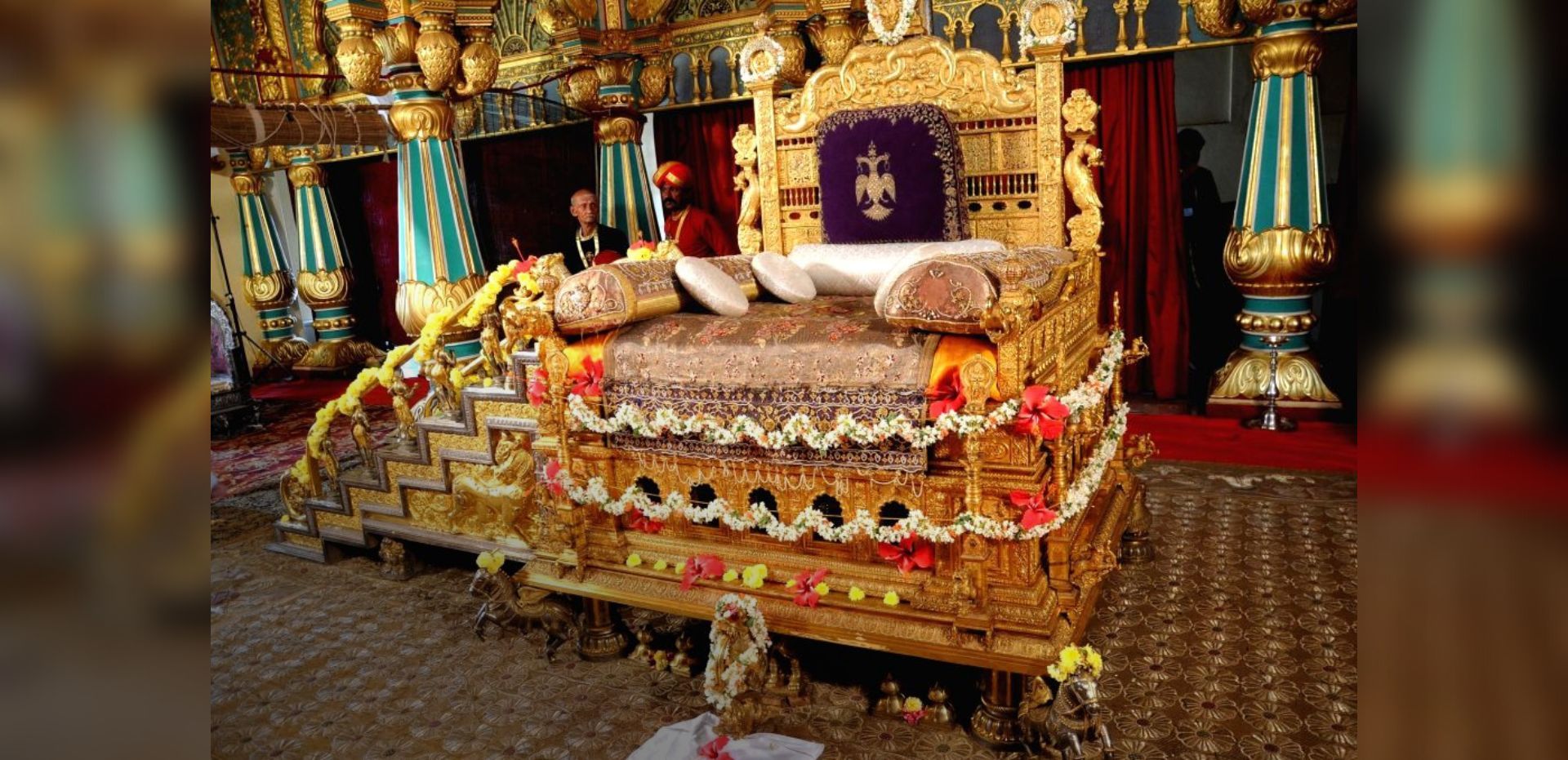
The furniture in the Mahabharat TV show operates as a silent narrative force. The creators do not treat chairs, thrones, beds, or platforms as decoration. Instead, each object behaves like a companion to the character who uses it. The show adopts this method consistently, allowing furniture to communicate social hierarchy, emotional weight, spiritual roles, and political tension without relying on spoken dialogue. Viewers absorb cues from the environment even when they may not consciously notice the staging.
Furniture in Mahabharat often reflects the inner states of characters. When a ruler sits at the center of the hall, the object beneath him anchors his authority. When a warrior returns from battle and rests on a simple bench, that surface becomes an indirect account of exhaustion, duty, and restraint. The show rarely places objects randomly. Every item, from the most elaborate throne to the humblest woven seat, enters the frame with a specific purpose.
The living spaces of the main families demonstrate this narrative approach. The corridors of Hastinapur rely on carved pillars and heavy benches to announce power and tradition. These objects send signals about the long lineage of the Kuru dynasty and the continuity expected from its sons. Meanwhile, Kunti’s private chambers use softer items and restrained furniture to convey her introspective temperament. Her room, shaped by modest beds, low stools, and unembellished storage pieces, frames her as a mother who carries hidden burdens yet refuses indulgence.
The Pandavas’ wandering life creates a contrast. Their forest homes include simple wooden pieces that highlight the shift away from royalty. Beds are narrow. Tables are often no more than planks supported by stones. The absence of ornamentation marks the gap between their inherited birthright and their forced exile. Viewers understand this difference immediately, long before dialogue clarifies the emotional and political tension.
The show also uses furniture to hint at destiny. When a character approaches a seat intended for elders or rulers, the camera lingers on the object. The viewer anticipates future shifts in leadership. A chair becomes an omen. A platform becomes a test. Even a folded mat can mark a turning point in a relationship. In this way, furniture becomes a narrative device that quietly shapes the viewer’s perception of upcoming events.
Furniture also defines alliances. When characters share a bench, the atmosphere appears cooperative. When they stand apart with separate seats, the distance becomes visible. A council room arranged in a semi-circle encourages discussion, while a strict row of chairs signals discipline and hierarchy. This method gives the series a steady rhythm that does not depend solely on spoken words.
Through these layers, Mahabharat transforms furniture into a set of roles. Each object has weight. Each piece participates in the story. Together, they create a rich visual vocabulary that supports the emotional and political arc of the entire epic.
Thrones, Crowns, and the Weight of Wood
The throne in Mahabharat holds more significance than any other piece of furniture. In the show, the throne does not simply confirm rule. It expresses the legitimacy, stability, and spiritual authority of the one who occupies it. The throne operates as a physical embodiment of a complex hierarchy where bloodline, virtue, and dharma collide.
The main throne in Hastinapur is large, heavy, and sharply defined. Its carved structure signals both the responsibility and the burden of rule. When Bhishma stands near it, the object reinforces his role as guardian of the kingdom. When Dhritarashtra touches its sides, the throne highlights his uncertainty and moral conflict. When Yudhishthira approaches it, the throne becomes a symbol of the rightful order that seems constantly out of reach.
The throne also influences how characters interact in the royal court. Seating arrangements expose alliances and rivalries. During councils, elders occupy specific chairs that mark their seniority. Warriors sit near the edges, ready to respond to conflict. Advisors place themselves at equal distance from rulers to indicate neutrality. These choices do not require explanation. The viewer understands the message as the camera moves across the room.
In scenes involving Duryodhana, the throne communicates deeper themes. He often stands near it but rarely sits on it in his early years. This pattern signals his desire for authority while emphasizing the tension between ambition and rightful succession. The slow approach to the throne becomes a storyline of its own. Every time he steps closer, the narrative surrounding his impatience and jealousy gains strength.
Yudhishthira’s relationship with the throne differs widely. When he sits on a smaller council chair, he appears thoughtful and balanced. When he moves toward the main throne, the viewer senses how destiny pulls him forward. The furniture becomes a physical measure of his inner struggle between humility and duty.
The show’s creators also use elevated seating to frame the cosmic scale of the story. Seats in the Sabha stand taller than surrounding chairs, creating a visual anchor for dharma. In episodes where Krishna enters the court, the chair offered to him becomes a symbolic question. Is it appropriate. Who should offer it. What does the position of the chair reveal about the power structure in the room. These small gestures reveal the intersection of human politics and divine presence.
The throne also represents the consequences of war. After the Kurukshetra conflict, the damaged hall and the scattered chairs illustrate a kingdom weakened by ambition. The once stable throne now sits as a reminder of the cost of power. Its structural perfection contrasts with the broken relationships that surround it.
Through these scenes, Mahabharat uses thrones and royal seating to articulate its core themes. Authority, legitimacy, morality, and cosmic balance all take shape through wood, height, and placement. The furniture becomes a voice that speaks alongside the dialogue.
The Household Furniture of Queens and Mothers
The emotional heart of the Mahabharat often rests in the private chambers of its queens and mothers. The furniture in these spaces communicates their aspirations, fears, loyalties, and sorrows with quiet precision. The show relies on these objects to convey the internal conflicts of characters who often carry responsibilities heavier than those visible in the public court.
Kunti’s furniture reveals the depth of her sacrifice. Her bed, simple but dignified, reflects her position as a mother who shoulders unspoken secrets. The viewer sees her seated at the edge of it during moments of confession or contemplation. The bedside stool where she places gifts from her sons becomes a symbol of her connection to them. Her storage chests, closed and carefully arranged, reflect the hidden truths she protects through years of uncertainty.
Gandhari’s chambers present a stark contrast. Her decision to blindfold herself influences the set design. The furniture in her room appears sparse. Smooth surfaces, straight lines, and uncluttered layouts help convey her disciplined nature. Her bed lacks ornate carvings, and her chairs remain minimal. This approach frames her as a queen who practices restraint in every aspect of her life. It also reflects the emotional distance created by her blindness and grief.
Draupadi’s chambers shift throughout the show. During peaceful periods, her room features refined furniture that aligns with her royal status. As conflicts intensify, her surroundings grow more austere. Her bed becomes narrower. Her seating becomes simpler. Her storage pieces carry fewer embellishments. The show uses these adjustments to mirror her inner turmoil as she navigates marriage, public humiliation, exile, and the expectations of a divided family.
Cradles serve as essential symbols of continuity and destiny. When a newborn rests in a detailed cradle, the viewer senses the significance of the child’s future. When a cradle remains empty, the absence points to loss, concern, or political uncertainty. The arrangement of these cradles also matters. A cradle placed near a window suggests openness and hope. A cradle kept near the ground suggests vulnerability and protection.
Curtains and soft furnishings contribute to emotional storytelling as well. The show uses thick curtains in moments of grief, lighter ones in moments of peace, and layered textiles in scenes involving tension. These choices create an internal rhythm that follows the characters’ emotional journeys.
The household furniture of the mothers and queens is not decorative filler. It forms part of the emotional fabric of the narrative. It reflects the values, hardships, and inner debates of the women who hold the family together.
War Rooms, Dice Halls, and Strategy Tables
Political tension in Mahabharat intensifies in spaces where strategy, negotiation, and deception take place. The show relies on furniture in these rooms to sharpen the stakes. Tables, benches, platforms, and chairs form a vocabulary of power relations and hidden intentions.
The dice hall provides one of the clearest examples. The central table dominates the room. Its height, shape, and polished surface establish it as the stage where fate is manipulated. Yudhishthira sits at one side in a position slightly lower than the other players. This subtle difference communicates vulnerability. Meanwhile, Shakuni and Duryodhana sit where the light falls behind them, creating shadow on their faces. Their chairs stand slightly elevated, hinting at the imbalance in the situation long before the game turns against the Pandavas.
The arrangement of seats in the dice hall reinforces themes of entrapment. The Pandavas sit in a cluster that restricts movement. The opposition spreads out, controlling the space. Even the distance between the chairs matters. Yudhishthira sits close to the table, as if bound to the challenge, while his brothers appear separated from him, unable to intervene. These visual structures underline the sense of helplessness that permeates the scene.
War rooms use furniture to map ambition. Large tables holding rolled maps, scrolls, and weapon drafts become objects that reflect the preparation for battle. When advisors gather around a table, their positions reveal their influence. A warrior who leans on the edge signals readiness. A minister who stands behind the table without touching it signals caution. A general who sits while others stand communicates authority. Each choice creates a dynamic that helps the viewer understand the hierarchy.
Vidura’s chamber stands out for its subtle use of furniture. His table remains small. His chairs remain modest. His shelves hold scrolls rather than ornaments. This simplicity reflects his moral stance. When visitors enter his room, the seating arrangement forces them into a more equal position. The furniture pushes characters into honest dialogue because no object dominates the space. As a result, the viewer feels the shift from political tension to sincere counsel.
Diplomatic spaces also rely on furniture to communicate motives. When messengers from rival kingdoms visit, the chairs offered to them carry meaning. A high backed chair suggests respect. A low stool suggests distrust. When the visiting party declines a seat, the gesture changes the power dynamic. The room transforms according to who sits, who stands, and who controls the space between the objects.
In some scenes, the show places characters at long tables that resemble those in modern meeting spaces or even restaurant booths, and the positioning at these tables highlights alliances and silent disagreements. The simple act of choosing a seat becomes a strategy of its own.
The show uses each object in political rooms to advance the narrative. The furniture supports scenes of betrayal, negotiation, and strategic planning with precision.
Ashrams, Forest Huts, and the Meaning of Simplicity
Spaces of spiritual practice follow different rules. The furniture in ashrams and forest huts communicates renunciation, humility, and clarity. Characters who step away from the palace leave behind ornamented chairs and carved beds. Their new surroundings rely on low stools, mats, wooden planks, and small platforms that serve multiple purposes. The viewer sees the shift in values immediately through this contrast.
Pandu and Madri’s forest home uses minimal furniture to underline their withdrawal from royal life. Their bed appears narrow and unadorned. Their seating consists of stools made from rough wood. Their cooking area uses simple stands rather than built structures. Each object highlights their attempt to live outside the influence of politics and privilege.
Krishna’s spaces have more nuance. In Vrindavan, seating remains communal. Mats lie across open floors. Low stools invite group gatherings. The layout encourages participation and communication. Later, in Dwarka, the furniture becomes more structured but still avoids excessive ornamentation. Chairs appear practical and symbolic of shared power rather than dominance. Communal seating reinforces his role as a guide rather than a ruler who relies on distance and superiority.
Rishi hermitages represent the purest form of functional furniture. Mats serve as beds, seats, and meditation platforms. Low wooden boards support teaching sessions. Fire pits anchor the room and become the center for instruction, ritual, and debate. These objects reflect a worldview where knowledge matters more than material comfort. The lack of ornate furniture highlights the trust placed in intellect and discipline.
Simplicity carries symbolic weight in these contexts. A single stool may represent a teacher’s authority. A mat shared by students may represent unity. A wooden plank used repeatedly across generations may represent continuity. The viewer gains insight into spiritual values by observing these objects.
The contrast between the palace and the ashram makes each transformation more powerful. When a royal character enters an ashram, the difference in furniture changes the tone of the scene. Characters sit closer to the ground. Chairs disappear. Discussions become more direct. This shift signals humility and reflection. It reinforces the theme that spiritual truth demands a setting free from distractions.
Furniture in these spaces reveals a world that values knowledge and internal discipline over power and material grandeur. The simplicity of objects becomes a measure of character.
When Furniture Foreshadows Fate
Certain scenes in Mahabharat use furniture as a silent prophecy. Objects positioned in specific ways foretell events without characters speaking about them. These moments deepen the emotional impact and strengthen the show’s visual narrative.
Draupadi’s humiliation scene demonstrates this technique. As she is brought into the court, the camera highlights the furniture along the corridor. The benches appear rigid and distant. The chairs align in rows that suggest judgment rather than support. The arrangement of objects conveys the severity of the moment before the dialogue begins. When she enters the hall, the distance between her and the seated elders grows more significant. The viewer perceives her isolation through the placement of chairs rather than through verbal description.
Bhishma’s death invokes one of the most memorable uses of symbolic furniture. His bed of arrows becomes the inversion of a royal bed. It is a structure shaped by conflict, duty, and consequence. The show presents it with the same care given to ornate furniture in earlier scenes. This contrast highlights the cost of war and the transformation of Bhishma’s role from protector to witness.
Empty chairs also signal fate. When a council begins and a specific chair remains unoccupied, the empty space calls attention to absence, loss, or looming conflict. A vacant seat may represent a fallen warrior or a leader yet to rise. The viewer senses meaning without narrative exposition.
Furniture also warns of change in the palace’s final chapters. Pillars appear cracked. Chairs lose their alignment. Tables hold fewer items. The space feels disordered, even when characters attempt to maintain ceremonial routine. These visual choices reflect a kingdom losing coherence after years of conflict.
Even small objects participate in foreshadowing. A stool knocked slightly out of place can suggest agitation. A mat rolled more tightly than usual can hint at departure. A platform cleaned with unusual care can signal an important meeting. The show often uses these details to prepare the viewer for emotional or political shifts.
These moments demonstrate the depth of the production team’s visual storytelling. The furniture does not only respond to the plot. It anticipates it. Each object becomes a signal, guiding the viewer toward the next turning point.