
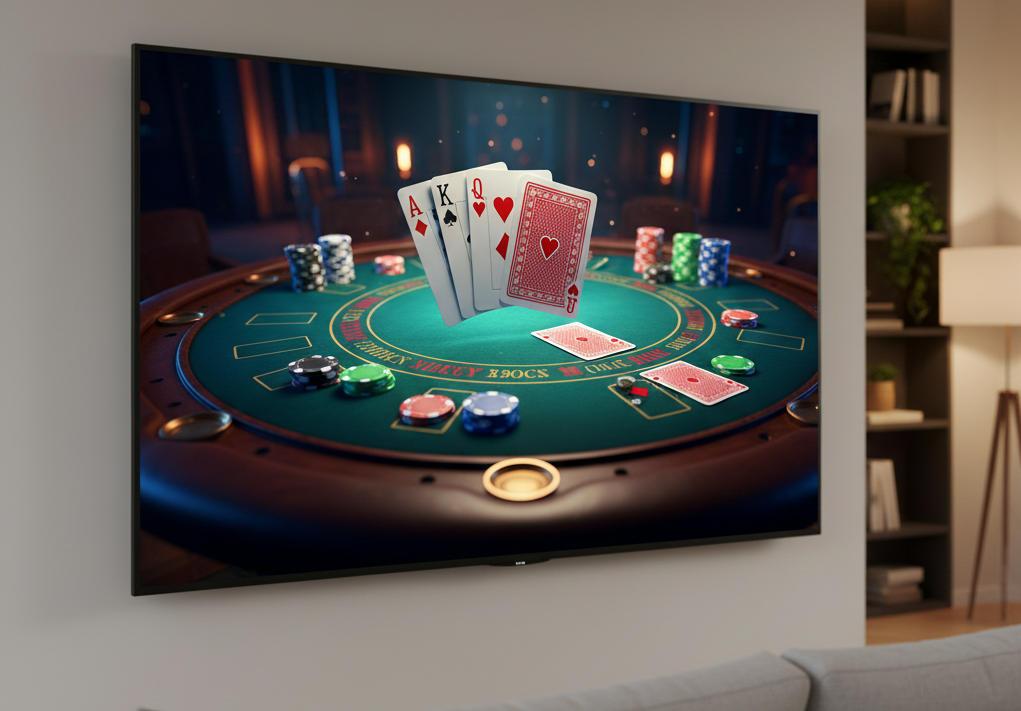
The image was created by us via AI, specifically, for this article.
Celebrity Blackjack landed in the mid-2000s with a simple promise. Give familiar faces a felt table, clear rules, and a running tally, then let the cards shape a story. The format turned quiet moments into small dramas. A split here. A double there. A last-hand swing that sent chips flying and celebrities grinning for charity. It was tidy television that moved briskly and never asked the audience to decode jargon or keep up with arcane strategy. You could drop in late and still understand the stakes in seconds.
What makes that show worth revisiting today is how cleanly it anticipated modern viewing habits, with celebrity-led reality shows trending globally. People now expect quick context, visible progress, and moments that invite instant reaction. Tournament hands created tidy chapters. Short post-hand resets made it easy to talk with friends, check a phone, or watch a replay. The table also gave celebrities a comfortable stage. Their choices felt personal and unscripted, so viewers read their tells, rooted for bold bets, and compared notes at home. In a time when so many series fight to hold attention, Celebrity Blackjack showed how a straightforward game, played in a friendly spirit, can create a reliable rhythm for connection.
Why blackjack games became a natural bridge from the TV table
The show worked because blackjack is fast, transparent, and repeatable. Those same qualities explain why many viewers later wanted to play blackjack games online. A televised hand reveals everything that matters. Players set a bet, see their two cards, read the dealer upcard, then make crisp choices. Online experiences mirror that rhythm. A modern blackjack game on a phone or laptop uses digital dealing to keep the tempo steady, with shuffles handled in the background so players can focus on the next decision. Betting windows are clear. Chip values are easy to read. Outcomes arrive in seconds, so the pacing feels close to TV.
Another strong link is structure. Celebrity Blackjack used tournament scoring that created arcs across a set number of hands. Online tables can offer similar frameworks through timed sessions, hand caps, or leaderboard formats that make progress visible. That structure is friendly to casual players because it sets expectations about length and flow. It also suits spectatorship. People can watch a stream or a friend’s screen share and follow along without needing deep rules.
 On the technical side, online blackjack benefits from simple mechanics that map well to touch screens. Hit, stand, split, or double are one-tap actions. Animations provide clear feedback without slowing the tempo. For players who enjoy comparing approaches, many titles include hand histories or basic-strategy reminders that feel like the on-air commentary viewers loved.
Finally, the breadth of blackjack casino platforms means there are many visual styles and table speeds, from classic felt to modern, high-contrast layouts. The through-line is the same. Quick decisions, visible stakes, and an easy on-ramp keep attention high. That is why the path from watching celebrities play to tapping through hands online felt so natural.
The audience habits that made Celebrity Blackjack feel ahead of its time
Look at how people watch TV today and you can see why that table-centered format clicked. Viewers split attention across screens, sample short chapters, and gravitate to personalities they already know. Each of those shifts lines up with what the show delivered.
Celebrity-driven competition continues to draw interest. Demand for “celebrity” subgenres in the United States measured 1.5 percent of total series demand in Q3 2024, the highest share among markets reviewed. That may sound small, but in a vast catalog it is notable and consistent with the staying power of personality-led formats. Streaming distributors also command a larger slice of TV watch-time.
In July 2025, Nielsen’s Media Distributor Gauge reported YouTube at 13.4 percent of TV watch-time, part of a months-long lead that underscores how highlights and clips spread quickly across connected screens. Meanwhile, second-screening is nearly universal, which complements a game that resets every hand. GWI reports that 86 percent of internet users use another device while watching TV. And the broader digital card-play and wagering ecosystem keeps growing. One forecast places the global online gambling market at 78.7 billion dollars in 2024, with an expected 153.6 billion dollars by 2030.
| Shift in viewing | Why it mattered to fans | Latest datapoint |
| Second-screen habits | Quick hand resets fit phone checks and chat | 86% of internet users second-screen |
| Streaming share | Short clips travel fast and keep shows discoverable | YouTube at 13.4% of TV watch-time, July 2025 |
| Celebrity pull | Personality-led, light competition stays popular | Celebrity subgenre demand share 1.5% in US |
| Digital card-play growth | More comfort with online, session-based play | 78.7B dollars in 2024 to 153.6B by 2030 |
It is worth noting that these trends describe behavior more than platforms. People want formats that respect their time, reward quick context, and feel personal. Celebrity Blackjack was built for that.
What the show taught modern TV culture
The series also offered three lessons that still guide unscripted TV. First, give viewers simple choices to track. Blackjack makes the decision tree visible, so audiences feel included rather than intimidated. Second, let personalities breathe. Celebrities did not need elaborate backstories. A smile after a double or a laugh after a risky split told you everything. Third, think in chapters. Hands provided natural beats that fit short attention cycles and social sharing.
These ideas align with how entertainment now competes for attention. Deloitte notes that media companies are contending for a fixed slice of daily time. As the firm puts it, “media and entertainment companies… are competing for an average of six hours of daily media and entertainment time per person.” In such a crowded day, formats that reset often and foreground human reactions travel farther.
They are easy to clip, easy to replay, and easy to discuss on a phone while the TV keeps rolling. Widen the lens and the pattern holds. Streaming distributors take a larger share of viewing, and personality-led concepts remain steady performers within big catalogs.
How producers can use the lesson now
For producers, the takeaway is practical. Build shows that invite quick, low-effort participation. A hand, a round, a vote, a reveal. Keep scoring legibly and momentum high. Treat social highlights as part of the experience, not an afterthought. Celebrity Blackjack did all of this with a deck of cards and a clear scoreboard. The tools have changed, but the cultural lesson stands.